SaaS Stack for a Digital Marketing Agency
 Veer
Veer
 Veer
Veer
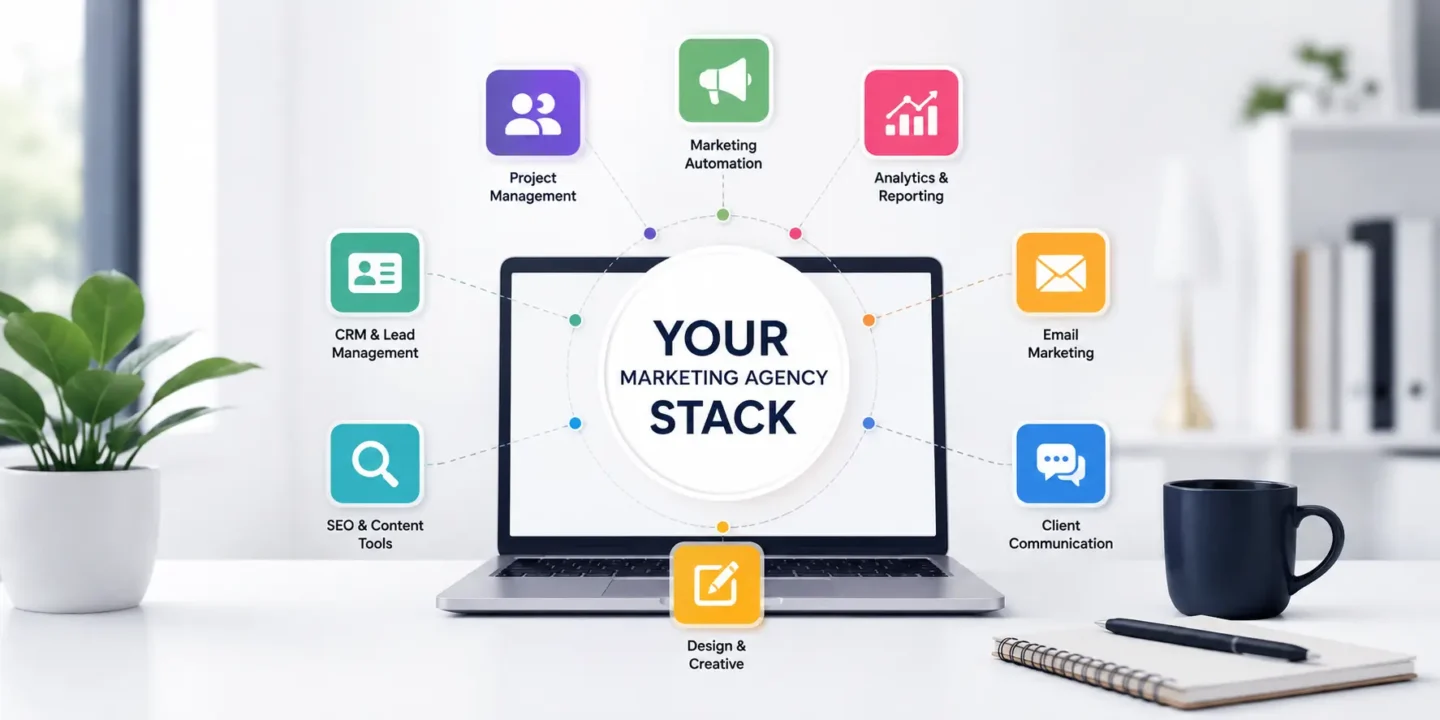
Behind the scenes, a digital marketing agency is as effective as its systems. When everything is done manually, it’s easy to feel overwhelmed with managing SEO campaigns, managing social media content, managing paid advertising, communicating with the clients, reporting, and managing internal communications. This is why it’s wise for the marketing agency to invest in the optimal SaaS stack.
The perfect SaaS stack enables agencies to streamline their workflows, reduce repetitive tasks, streamline communication with clients, and monitor campaign results over time and across various campaigns. Agencies can save themselves a lot of time by creating a streamlined workflow that enables each facet of the business to work in harmony instead of jumping from one disjoined process to another. This makes the customer service quicker and better, and also boosts the profit of the business.
Most agencies have multiple clients at the same time, with varying objectives, time frames, and reporting needs. In the absence of a central software ecosystem, teams might have to deal with multiple deadlines, duplicate work, misplaced files, and communication issues.
With a solid SaaS stack, there is a one-to-one correlation of projects, documents, campaigns and analytics. The team members can be sure exactly what their work, progress can be tracked in real-time by managers, and the clients could have more rapid updates and far more professional reporting. As an agency scales up, the appropriate software will be the basis of growing a business without drastically changing its operational complexity.
An effective agency must have a solid project management software solution. That’s where campaigns are designed, tasks are assigned and deadlines are managed, and client deliverables are managed. A project management tool avoids the use of spreadsheets and tiring email chains.
The collaboration of content writers, designers, SEO pros, and account producers in the same workspace allows projects to be completed faster and without missing information. Additionally, a centralized workflow will help with the easier onboarding of new team members — processes have been well documented and organized.
Communication with clients is among the largest different factors of an agency’s professionality. Sporadic communication through emails, messaging apps and phone calls can cause confusion and delays.
Communication and meeting platforms enable agencies to organize calls, keep everyone informed, request feedback, and track predecessors of conversations in a comprehensive history. Having set-up communication channels keeps the client inspired and satisfied, leading to long-term relationships.
Agencies that specialize in SEO services and other SaaS offerings, such as content marketing, need SEO software as a key component of the SaaS stack. Determining keywords to target, understanding their competitors, tracking their rankings, and creating a technical site audit are all ways to get information in your hands to help you make better marketing decisions.
Content creation tools also have an important contribution. Every day, agencies create blog posts, landing pages, ad copy, social media and email campaigns. Multiple team members can work on the content by utilizing writing and editing components together, ensuring the consistency of all your client’s content.
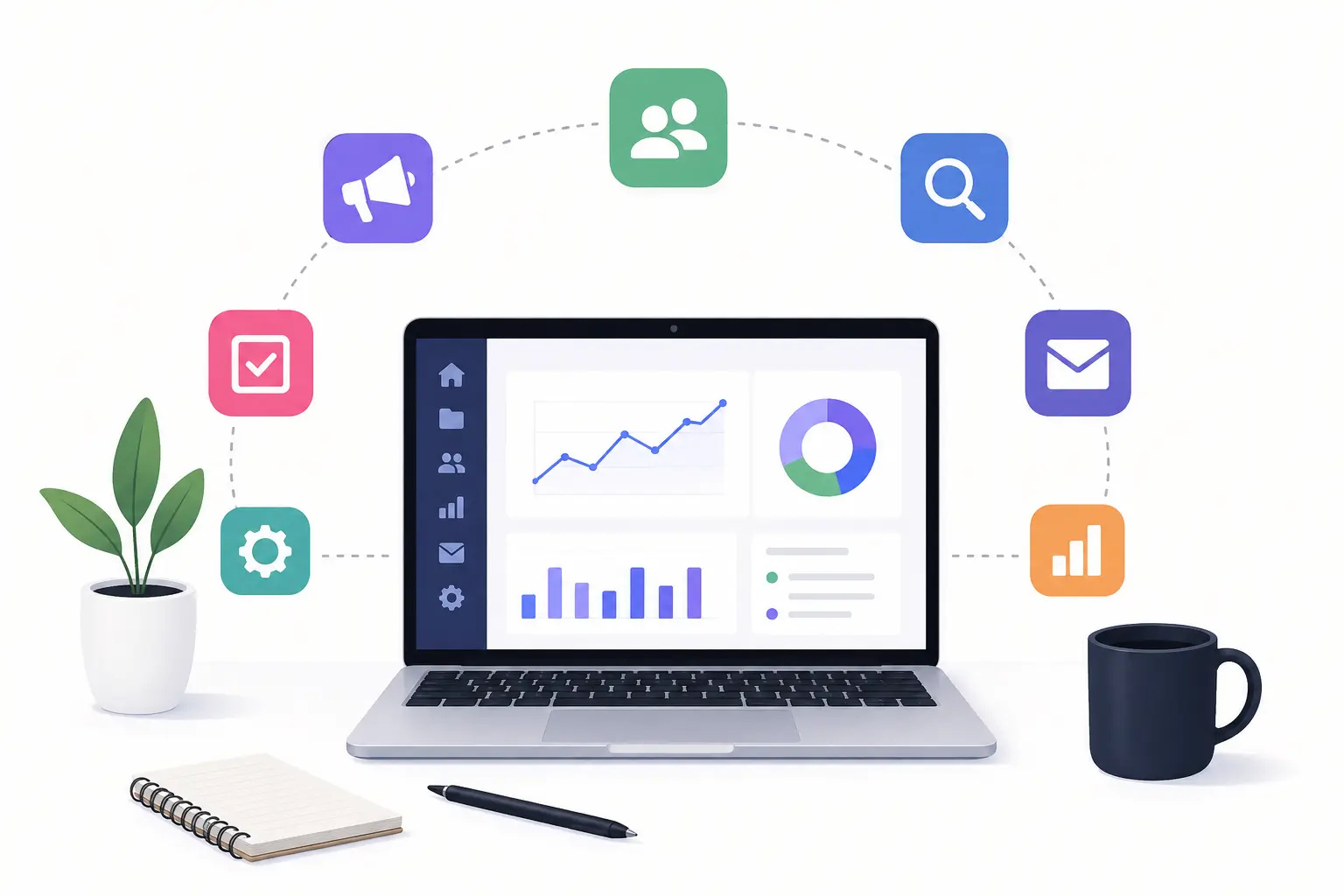
Today, visual content is a vital part of digital marketing. Whether on social media graphics, presentations, ad creatives, or website assets, agencies want design tools that can be used effectively for this collaboration and rapid revisions.
Cloud based design websites facilitate designers and customers to collaborate more effectively. Design feedback can be gathered directly on designs, revisions occur at a quicker pace and brand assets stay manageable throughout multiple projects.
Automation is a top feature of a modern SaaS value chain. Much of the agency work is repetitive, such as lead management, creation of tasks, reporting, email follow-up, etc. and campaign notification is also repetitive.
Automation platforms link various software applications together and ensure the easy transfer of data among them. A new lead can be added to the CRM instantly, a client request can give rise to a project task, monthly performance can be reported without manually having to collect information. These little automations can save you lots of time going all the way to the end of the month.
Clients aren’t satisfied with results, they want them to be visible. Integrating data from all analytics and ad platforms, SEO and email marketing tools into a single reporting dashboard helps make it so much easier to show off the performance.
Agencies can provide real-time dashboards instead of filling out days’ worth of reports, offering traffic growth, lead creation, conversion rates, and ROI on campaigns. Increase reporting strength and improve renewals.
The wrong way to do this is to buy too many tools from lots of agencies. It is best to create a lean stack, where each platform is dedicated to a specific function and is compatible with the other platforms. The idea is not to build the biggest software collections, the idea is to build a software system that will help to run it efficiently.
Typical agencies of this kind will come equipped with a heap of project management applications, communication tools, SEO systems, design, email marketing applications, automation software, analytics software and CRM tools. This blend provides most of the operational requirements, with maintained software budgets.
An ideal SaaS for a digital marketing agency is when it creates less friction, enhances collaboration, and enables them to focus on strategy instead of administration. With the proper software systems, agencies can address more customers, finish assignments earlier and have better profit margins.
Digital marketing is a constantly evolving environment and these two factors – operability and creativity – are mutually imperative and ever equatorial in the face of unprecedented competition. Constructing an integrated and growing SaaS stack empowers agencies to build confidence and provide outstanding outcomes for each consumer.

© 2026. All rights reserved by SaaS Deal Stack.



No Comments