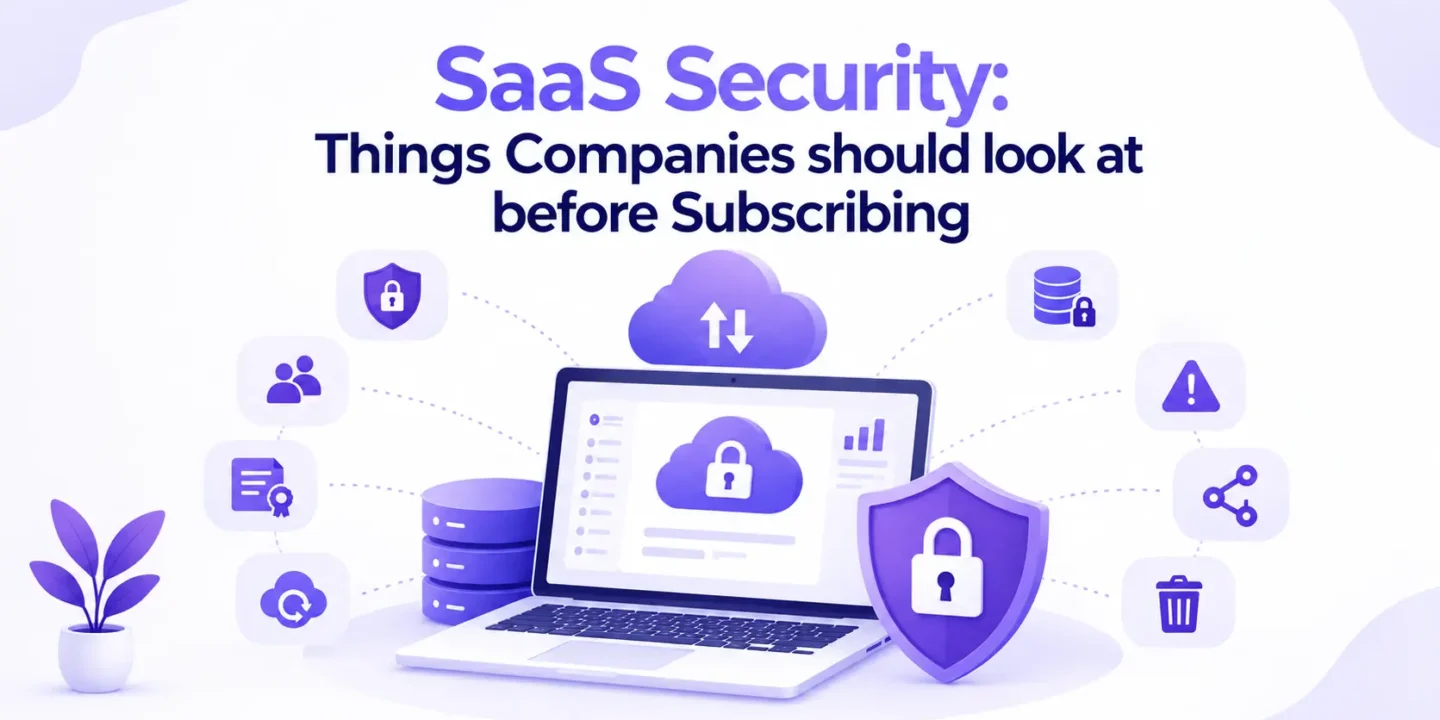
SaaS Security: Things Companies should look at before Subscribing
 Veer
Veer
 Veer
Veer
SaaS tools are a vital part of business activity today. Businesses have on the cloud software for CRM and accounting, communicating, project management and marketing, and storing documents, among other reasons. But businesses these days are not allowed to simply choose a SaaS platform only after they have carefully read all the features and their cost.
When selecting software, security should be considered one of the top priorities. A Saas application can potentially obtain customer data, staff details, paperwork, economic information, or perhaps various other delicate details. Evaluating the security measures that the provider takes to protect that information can inform a business.
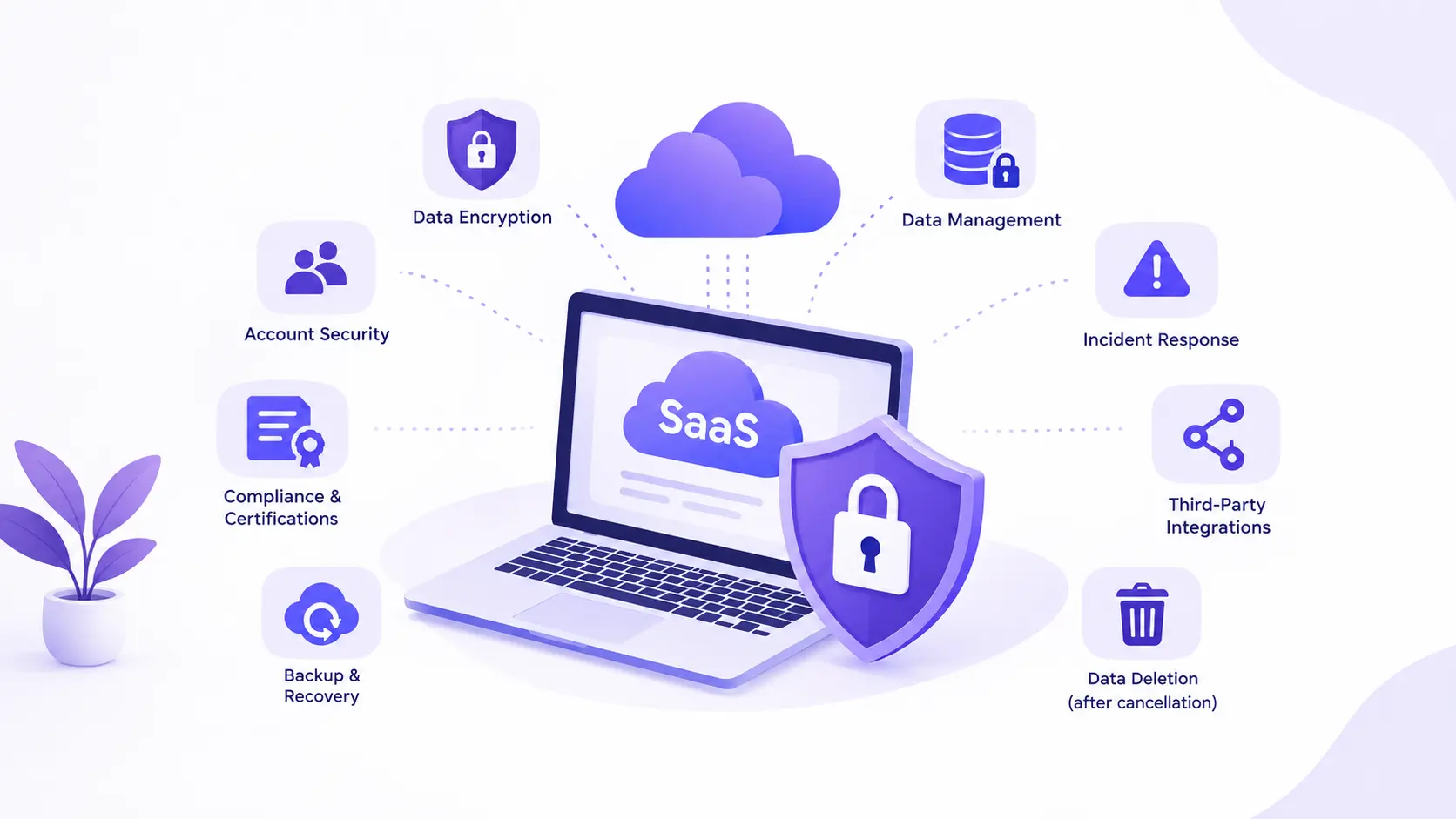
First off the list of questions for businesses should be how the SaaS company is protecting the data. Do the research on both encryption as data is transferred and when stored.
Encryption is a form of security that ensures that unauthorized people don’t have access to data. Additionally, firms must be aware of where their data is located and have a well-defined data retention and deletion policy.
In companies that deal with sensitive information, it is best to seek specific information from the provider and not be bound by a generic response like “enterprise-grade security.”
An effective SaaS platform will offer suitable measures to safeguard customers’ accounts. The additional level of security and verification offered by multi-factor authentication (MFA) is especially crucial.
Ideally, businesses should also review if there are role-based access controls provided by the platform. These controls can be set by administrators to control who can access and edit what content.
Principle of least privilege can limit unnecessary access to any sensitive information. The National Cyber Security Centre also has a few recommendations to make for the security of SaaS: Managing them centrally, controlling access to users and constantly tracking audit logs.
Security reports and certifications may give further details of a provider’s security practices. Specific standards or frameworks like SOC 2, ISO 27001, GDPR related requirements, HIPAA, or PCI DSS may be sought based on the nature of the business and the type of data being handled.
But a certification should not be seen as an assurance that the platform will never be insecure. Any enterprise employing it should be aware of the scope and content of this certification and if it will be available for the service they are using.
If the workload is sensitive, also request relevant security documentation from the provider that will give you more valuable information than looking solely for certifications on the website.
Regardless of how robust the security measures are, companies need to think about what will occur in the event that they accidentally delete, corrupt, or fall victim to an incident.
Ask the SaaS provider if they back it up regularly and for how long. Also, knowing the provider’s approach to disaster recovery and response and the time needed for potential restoration is helpful.
For crucial business applications, recovery may be as vital as preventive security measures.
Follow and review Company’s Incident Response Process.Follow and review Company’s Incident Response Process.
No security solution can eliminate all conceivable threats. For this reason, companies should learn the typical actions that a SaaS company will take when something goes wrong.
Examine if the provider has a security incident response plan and if they provide a notification to customers about him. The terms in the service contract, or data processing contract, can also define the notification obligations.
If flexibility is needed, a provider with explicit communication in regard to security policies can make it easier for the customer to understand their responsibilities.
There are many SaaS applications that integrate or use APIs with other applications. These connections can help boost productivity, but they can also present extra safeguards challenges.
Review what info, if any, the integration has access to and whether there is a way to restrict access, before integrating a SaaS application with another business system.
For businesses, there should also be a review of connected apps that should be terminated if they are not needed.
There is no reason to put down the “locks and ladders” once a subscription is over. Businesses must be aware of what will occur with their data if they terminate their service.
See if the provider provides a customer the option of moving their data elsewhere and how long the provider will keep information after cancellation. Having a clear process for data deletion and export can help to facilitate provider switches and limit data exposure if the provider is no longer needed.
Purchasing a Saas software isn’t all about attributes and subscription rates. Savory Security: It should be considered from the start, particularly if the platform is to store sensitive business or customer information.
Read provisions on data protection, account security of accounts, compliance, back-up, incident response procedures, integration, and deletion of data prior to subscribing. When selecting SaaS software, businesses can identify risks, and determine which software is appropriate for their operational and security needs by asking the right questions.

© 2026. All rights reserved by SaaS Deal Stack.
No Comments