When Should a Small Business Invest in CRM?
 Rajesh Patel

 Rajesh Patel
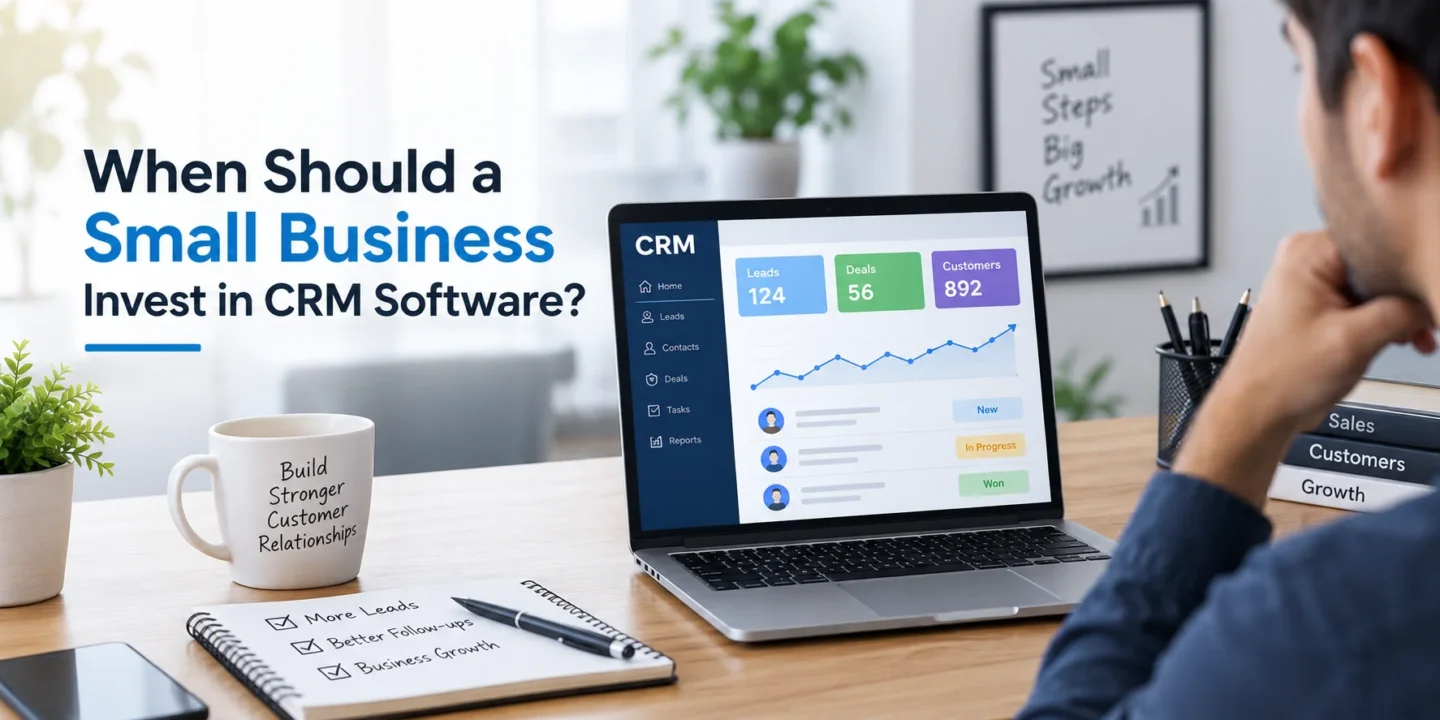
For a small business, there is a point when keeping customer details in spreadsheets, inboxes, notes, and memory takes more time than running the business. That point is often the right time to consider CRM Software. CRM Software decisions should be based on how difficult it has become to keep sales conversations, follow-ups, and customer information under control.
In the early days, a spreadsheet may be enough. A business owner can remember who called, who needs a proposal, and which customer should be contacted next. As the customer base grows, that system becomes harder to manage. Important details can sit in different places.
CRM Software is useful when customer information needs one reliable home. If employees are asking for contact details, checking old emails for conversation history, or keeping separate notes about the same customer, the business has probably outgrown its informal system.
Sales rarely depend on one conversation. A prospect may need several calls, emails, demonstrations, or reminders before making a decision. When these steps are managed manually, follow-ups can easily be forgotten.
A business should consider CRM Software when its team spends too much time remembering what needs to happen next. Having customer conversations and follow-up tasks organized in one place makes the sales process easier to manage. It also gives owners a clearer view of opportunities.
A process that works for one or two people may become messy when more employees join. New team members need customer context without repeatedly asking someone else for background information.
CRM Software can create a shared record of customer activity. This matters when leads move between salespeople, customer service takes over after a purchase, or a manager needs to review an account. Everyone can understand the customer relationship without chasing information across different tools.
Spreadsheets are useful, but they are not designed to manage every part of a growing customer relationship. Once a sheet contains contact lists, sales stages, reminders, notes, and updates from several people, maintaining it can become a job of its own.
This is a practical sign that CRM Software may be worth the investment. If employees are fixing duplicate records, updating columns manually, or worrying about the latest version, the business is spending effort on administration instead of customers.
Small businesses often operate with limited time and money, so decisions need to be based on what is happening. If an owner cannot quickly tell how many leads are active, where prospects are in the sales process, or which customers need attention, planning becomes harder.
CRM Software can bring those details into a clearer view. CRM Software choice should match the company’s sales process, team size, budget, and technical comfort. There is little value in paying for features nobody needs.
There is no universal revenue figure or employee count that says a business must buy CRM Software. CRM Software’s value depends on whether the current way of managing customers is creating avoidable work or missed opportunities.
If customer records are scattered, follow-ups are inconsistent, the team is growing, or sales information is difficult to track, the timing may be right. It can start simple and expand.
The best CRM Software is the one the team will actually use. Before investing, look at the problems you want to solve, the processes you already follow, and the time your team spends managing customer information. If CRM Software removes real friction from those tasks, it can be a sensible next step for a small business.

© 2026. All rights reserved by SaaS Deal Stack.

No Comments