How to Choose the Right SaaS Tools for Your Business
 sabhijeet01

 sabhijeet01
Software as a Service (SaaS) has impacted the world of business. There’s a SaaS solution for practically anything, ranging from project management and accounting through marketing, communication and customer support to automation. Having too many options out there is useful, but too many options is not as useful as choosing the right tools, otherwise costs can end up higher and they will cause more complexity and they will slow your workforce.
Then, how to pick the most suitable SaaS tools for your business? The trick is to concentrate on what your specific business needs, rather than just picking up the hot program of the year.
Before looking for the right SaaS solutions, figure out what problem they will assist you to resolve.
Wishing for improved project management? Is there a need for a CRM system for dealing with customers? Do you have a lot of repetitive tasks in your team? Or, is it time for enhanced accounting & reporting?
Make a list of large difficulties and rank the order of difficulty. A SaaS tool shouldn’t be an unused subscription that covers a business need, it should be a solution to a problem the business is facing.
Ideally, the SaaS platform ought to be user friendly for the individuals that are going to make use of it.
Think about the number of employees who should have access, technical capabilities, and the functionality of the software within their current processes. There can be hundreds of advanced features in the tool, but if it’s hard to use it for your team, it’s a bad option.
Check software that has an easy to use interface, instructive documentation, training from the software supplier and trustworthy customer service.
Avoid selecting a SaaS product because of just its monthly fee.
Look at the features offered at each price level and know exactly what you need your business to have. Other platforms provide lower-cost tiers with lesser functionality and require extra fees for advanced options, extra users, storage capacity or connections.
Determine cost of ownership – subscriptions, set up, training, migration, and any additional add-on costs.
Look for SaaS discounts, annual discounts, free plans or lifetime deals that can help you save on software costs as well.
Your SaaS tools should be integrated and not separate silos.
For instance, your CRM might need to integrate issues with your email advertising platform, accounting software, customer support system or project management device.
Before you buy software, ensure that it’s compatible with business systems you’re already employing. While native integrations are better, there are tools like automation platforms that will bridge other applications.
A good integration allows you to eliminate the majority of the repetitive data entering tasks, and streamline your workflow.
In many cases, business software is likely to be a repository of sensitive data whether it be customer information, monetary data, employee information, or internal documents.
Review data protection and backup policies, access controls, and certifications of compliance if applicable to your industry with your provider.
Take into account the record and trustworthiness of the platform. If frequent downtime has a negative impact on your business, then a low-cost tool is not a good investment.
Take advantage of a free trial or a demo before buying if possible.
Assign a particular homework with the software to be accomplished by the team and gather their answers about it. Please help me with the following: Is it clear and easy to understand? Does it solve the problem it was designed for? Does it seamlessly integrate with current processes?
A short trial run can expose issues which may not be apparent in a website’s analytics.
Think about scalability when evaluating SaaS software, as your business will change in many ways in a few years.
Ask yourself if more users, more data, a new location or new requirements are a possibility with the platform as your business expands.
Later changes in software can cost a lot and be challenging to implement without time-consuming and costly rework, so selecting the right platform on the outset would help save time and money.
The selection of suitable SaaS tools is not in the race to collect the maximum number of applications. It is so that you build a software stack which enables your business to perform more efficiently.
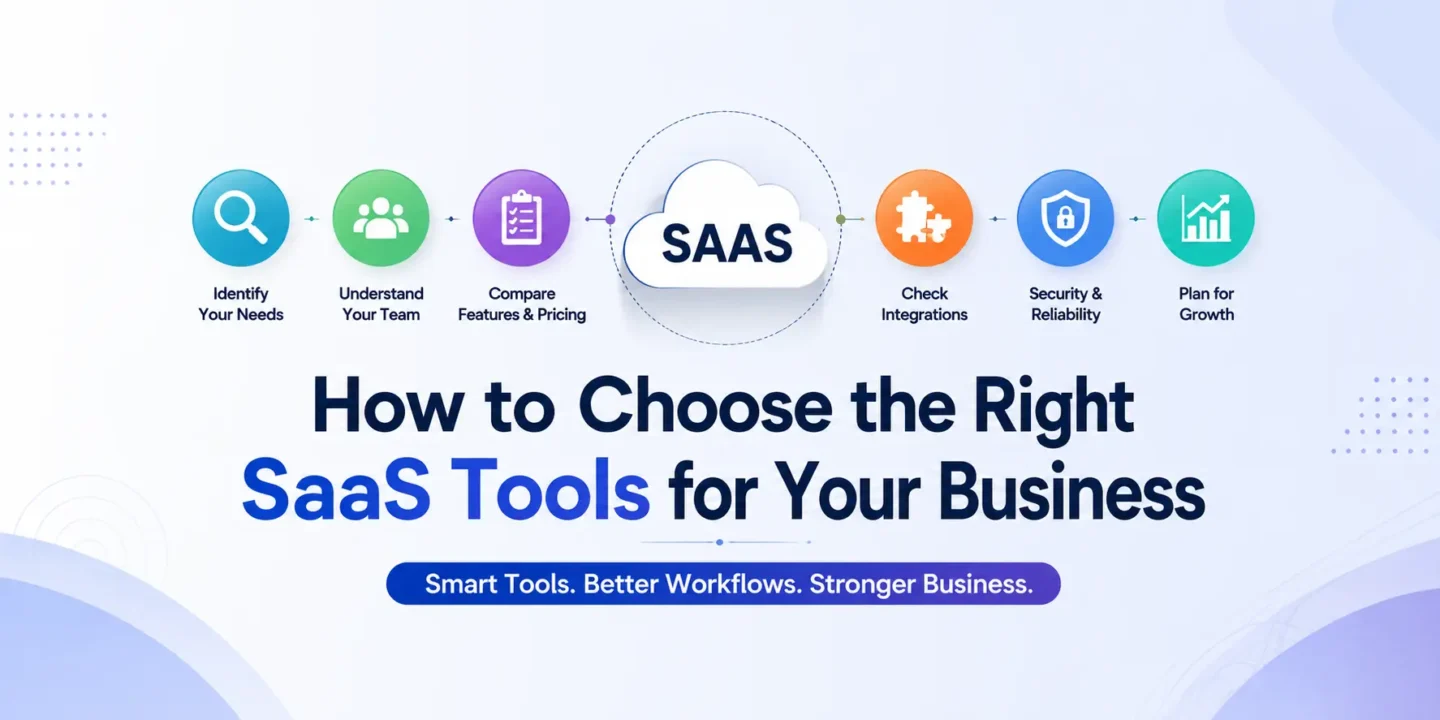
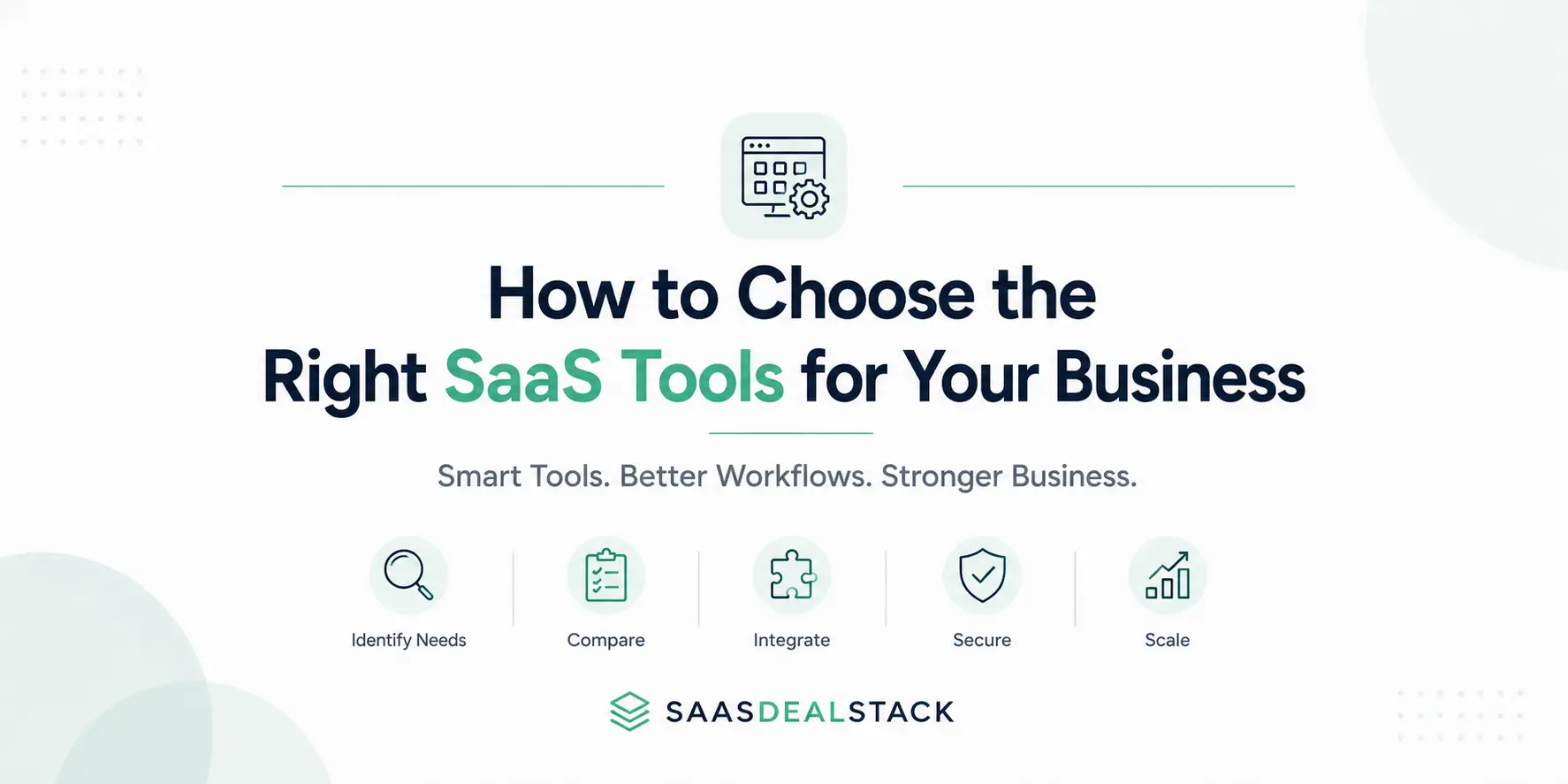
Begin by determining your needs, reviewing the prices and features, checking integrations and security, testing the system you are considering, and consider future growth. Most importantly, assess the value of the SaaS after adoption.
The right SaaS solution must allow for work to be easier, not harder. When done strategically, organizations need not invest in unnecessary software, increase their productivity, and create a more effective tech stack.

© 2026. All rights reserved by SaaS Deal Stack.


No Comments