Which SaaS Tools Improve Team Productivity the Most?
 Veer
Veer

 Veer
Veer
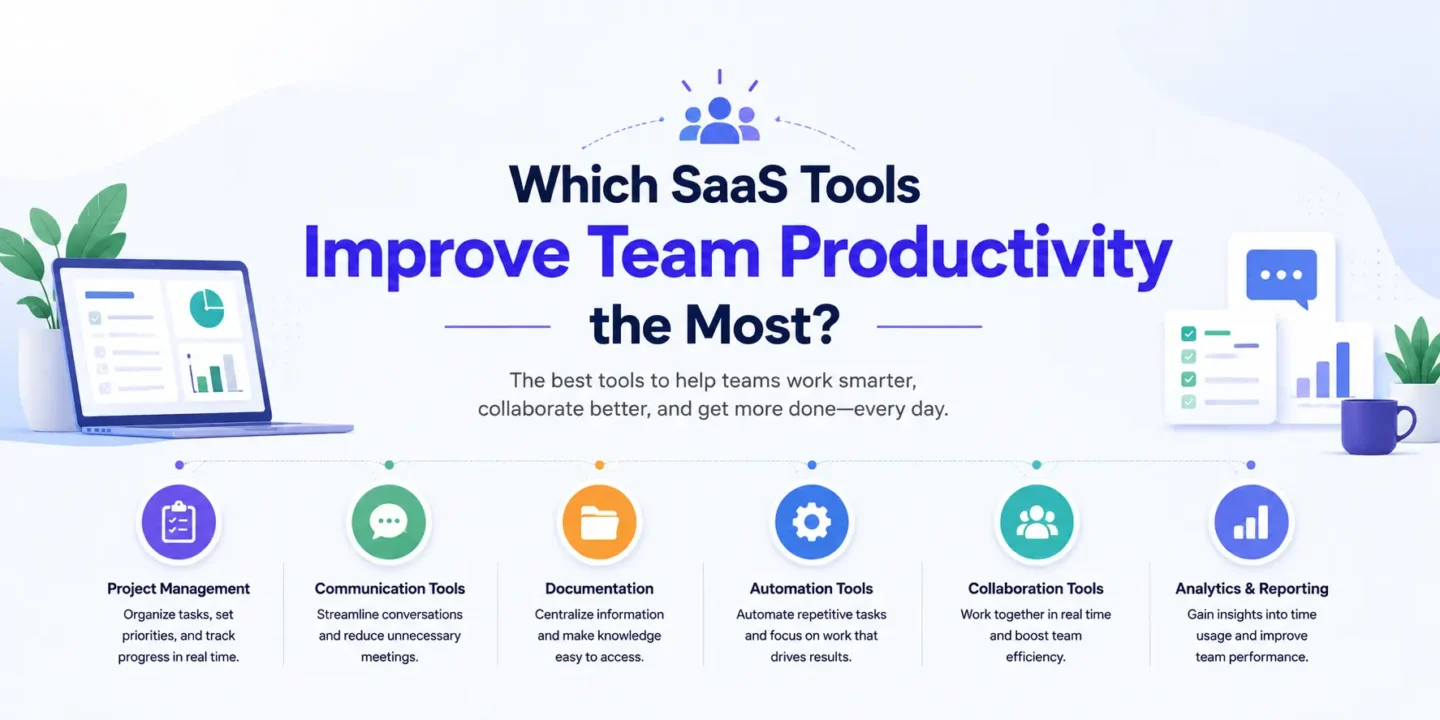
Team Productivity is now not only about the work done more, but also about doing less. The systems that modern businesses need are those that are designed to increase efficiency, manage tasks and minimize repetitive work tasks for employees. Communication becomes more complex as the situation in the organizations grows, with project size increasing, and coordination and communication between departments increasing. This is where the proper software as a service (SaaS) instruments can make an impact.
The highest-performing teams typically don’t depend on a number of software applications. Rather, they go with a well-owned SaaS stack that simplifies communication, project administration, documentation, automation and reporting. The most productive tools enable teams to work less and achieve more.
There are lots of productivity issues that aren’t actually if a person is not sufficiently diligent. These are due to poor workflow, information overload, unclear accountability and poor communication. Time spent constantly toggling between tools, data searching, needless meetings and manual report updates all lower productivity.
For boosting productivity, SaaS tools can help build structured workflows. They streamline data and take away manual work, and make projects and tasks visible. This helps teams to collaborate more smoothly and efficiently.
Project management software can be the backbone of an efficient team. It gives an all-in-one work space for assigning tasks, tracking dead-lines, managing priorities, and monitoring progress.
Team members don’t have to pull the info from spreadsheets or email chains; every team member knows what to do and who should be doing what. Managers get up-to-the-minute information on workloads, bottlenecks, and project schedules, minimizing delays and enhancing accountability.
One of the primary causes of poor productivity amongst growing businesses is inadequate communication. Incoming information becomes lost in email threads, updates are missed, and staff waste an inordinate amount of time in meetings.
Teams can arrange communications based on project, department, or client on modern communication channels. Questions can be answered immediately, files can be shared easily, and conversations can be easily found later. This decreases the requirement for on-going meetings and streamlines the decision-making process.
Effective teams don’t always find the same solution to the same problem. They record processes, centralize information and provide easy access to knowledge.
Collaboration platforms such as documentation can be used to develop standard operating procedures, onboarding processes, meeting notes, project documentation and internal knowledge bases. New hires get up and running faster, and more seasoned team members don’t have to spend as much time on repetitive questions.
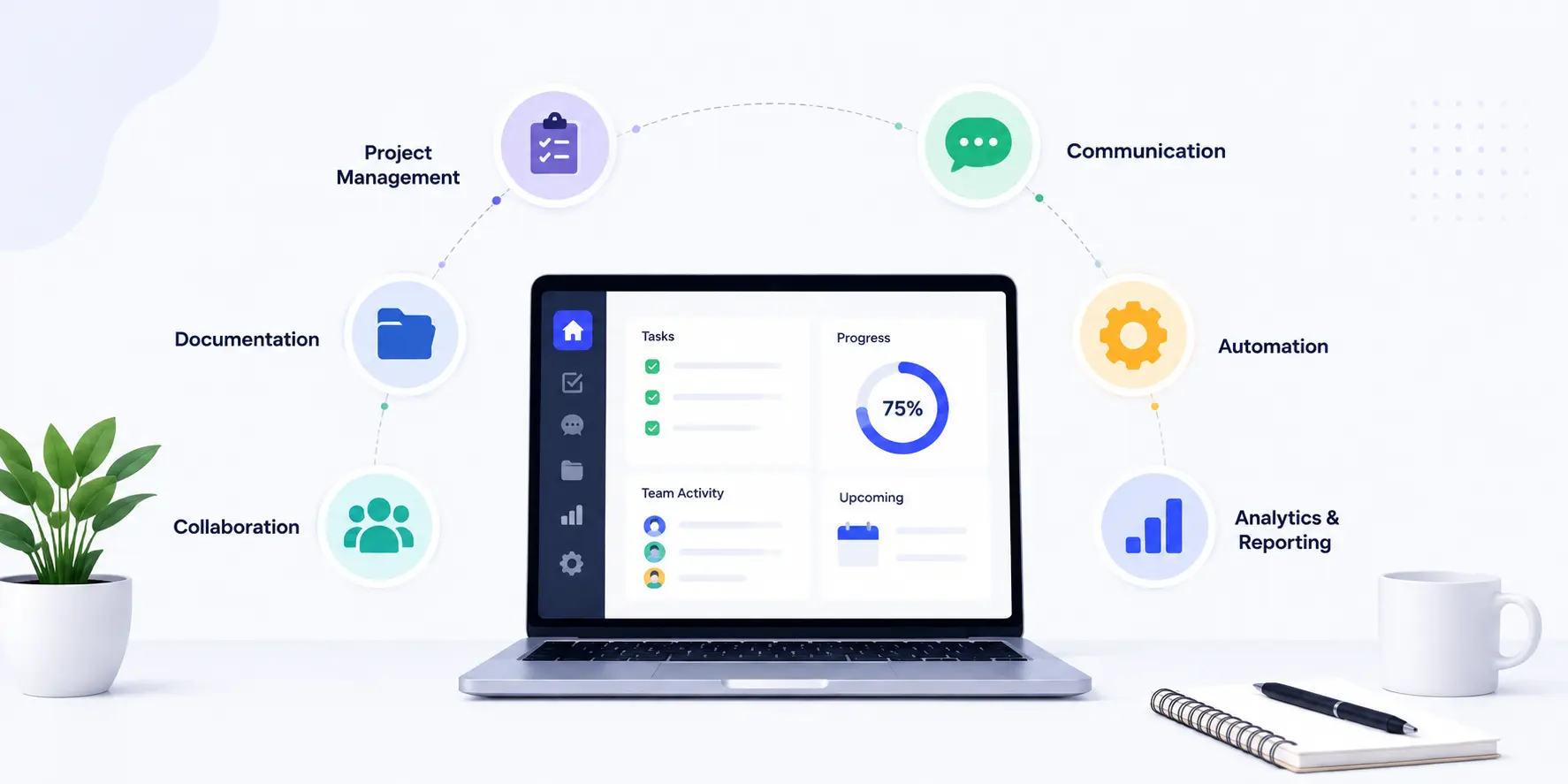
Automation is currently one of the best productivity boosters for businesses. Data entry, notifications, reports, file organization, follow up emails, etc. are many tasks that can be automated on a daily basis.
Automation tools enable various SaaS applications to be linked and information to be automatically transferred between them. This streamlines manual tasks, helps to cut out errors and enables staff to engage in tasks that demand creativity, analysis and decision making.
With the rise of collaboration and remote work, the demand for collaboration software has increased. Teams should be able to collaborate on documents, presentations, designs and projects while working at the same time.
Collaboration in real-time eliminates confusion about versions, accelerates the feedback process, and enables team collaboration from any location more efficiently. Everyone will have access to the latest information, instead of emailing attachments for collaboration on cloud-based collaboration tools.
Information about the time spent can provide great insight into possibilities for increased productivity. Work time tracking and analytics enable businesses to pinpoint inefficient processes, overburdened team members and tasks that are using too much time and resources.
It is not meant to be an all the time surveillance of employees. Instead, it is to get a sense of workflow patterns and to improve resource distribution. With more transparency on how time is spent, project schedules can be more realistic, and team productivity can be enhanced.
Many features do not yield the most significant individual productivity improvement, but it is often integration which does. A project management system that links to the communication, documentation, automation and reporting software are much easier to work with than silo applications.
The software programs should help the teams avoid unnecessary repetition of work and be accessible to their existing software and tools. A SaaS system (where SaaS is a system of systems) can provide a connected SaaS ecosystem that enables data to be passed automatically between various departments and processes.
The SaaS tools best suited to enhancing team success are those that eliminate unnecessary hassle between team members. Tasks are managed via project management platforms, communication tools to facilitate collaboration, documentation systems to retain knowledge and automation solutions to remove repetitive processes.
No company should be trying to use just dozens of productivity Apps to become more efficient. They require a linear SaaS technology platform that can facilitate cooperation, understanding, and uniformity of execution. In team situations where the necessary tools are used appropriately, teams can achieve more with fewer people, less time and greater quality, and better communication throughout the organization.

© 2026. All rights reserved by SaaS Deal Stack.




No Comments